
archives
National Articles
Submitted by walax on Tue, 2006-02-28 23:12. FeaturesWant to know what's going on outside of the Northwest, well this is where we'll bring you news, information and interviews from around the country. To kick things off we're launching the Walax.com Division 1 Coaches Series.
Local Interest Articles
Submitted by walax on Tue, 2006-02-28 23:28. FeaturesLocal Interest
Hear what local coaches, players and officials have to say. We’ll have interviews with some of the coolest characters in town. Find out how it all began, what the future holds for these people and programs and generally sit around the campfire sharing great lax stories.
Competitions and Giveaways
Submitted by walax on Tue, 2006-02-28 23:32. FeaturesIf it’s cool then we’ll be giving it away. From Walax apparel and new gear to league signups and camp places. Make sure to check these pages regularly as we’ll be putting up new competitions and giveaways every week.
Youth Information
Submitted by walax on Tue, 2006-02-28 23:36. InformationYouth Lacrosse Information
Click here for Boys Youth
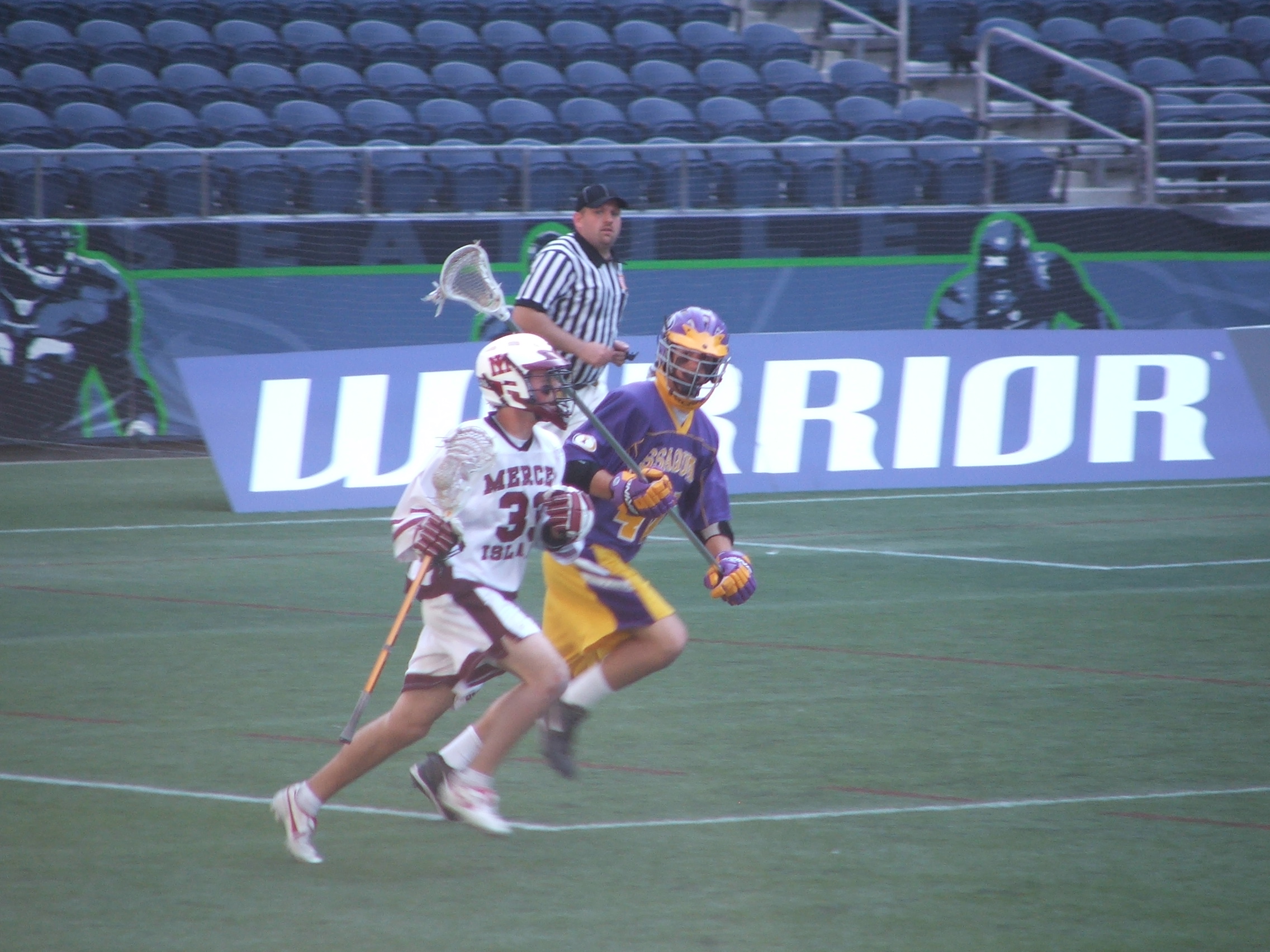
High School Boys
Submitted by walax on Tue, 2006-02-28 23:54. InformationHigh School Boys Information
For further information not on this page vist the the WHSBLA Site
2006 Schedule
High School Girls
Submitted by walax on Tue, 2006-02-28 23:55. InformationPlease visit the WSLA site for any information not listed on this page
2006 Schedule
Boy's Lacrosse Terminology
Submitted by walax on Wed, 2006-03-01 09:31. InformationWritten by Jim Anderson, author of the Youth Weekly Beat
Lacrosse players love their gear. In a way, lacrosse brings players back to the middle ages, with a suit of armor and a sword. For many, the next best thing about the game is the terminology. These terms open the door to an understanding of the rules, fundamentals, and tactics of the game. There is certainly an extensive lacrosse vocabulary that players and serious fans need to learn.
Ball or Ball down
All players shout ball any time the ball is on the ground. Often this is the first indicator to the player who had it that he has dropped it. Ball can also signal the intent of a player to go after the ball instead of the man. (see below)
Body Check
Defensively using the body to hit an opposing ball carrier or while contesting an opponent for a player a loose ball. The body check must always be done above the waist and from the front or side.
The Box
The rectangular shaped area around the crease / goal. Defenders seldom press players outside of the box. The distance involved makes it all but impossible to score from outside of the box. The rules state that the offense can only possess the ball for so long without entering the box. At the end of a game the team that is ahead must keep the ball inside of the box.
Butt
The end of a crosse opposite the head. All shaft ends need to be covered with a butt-cap.
Change planes – When a shooter has a close in shot, the goalie must respect where the ballcarrier starts his shot. If the shooter holds his stick high, the keeper does the same. Therefore it is most effective for the shooter to start high and shoot low, or vice versa. This is ‘changing planes’.
Clamping
On the face-off, a player pushes the back of his stick down on the ball in the attempt to gain control of it.
Clearing
An important defensive maneuver where defending players run or pass the ball out of their goal area. Clearing is best done along the sidelines, away from the front of the goal.
Cradling
In order to maintain control of the ball when moving along the field, players turn their wrists and arms to cradle the ball in the stick pocket.
Crease
The eighteen-foot diameter circle surrounding each team’s goal.
Cutting
An attacking player without the ball darts around a defender toward the goal in order to receive a “feed pass.” A cutting player is a cutter.
D Cut - A maneuver used by an attackman to get open for a shot. The player starts on the GLE, about 5 yards away from the goal. He then makes a rounded cut, on the side away from the ball. (completing a "D" shape) This is often the third attackmans’ move during a fast break.
Extra Man (aka Man Up or EMO) - Describes the team at a player advantage in a penalty situation. Opposite of man down.
Face-off
Takes place at the start of each quarter, after every goal, and after certain dead balls. Two opposing players crouch down at midfield, hold their sticks flat on the ground and press the backs of their stick pockets together. The ball is then placed between the pockets and, when signaled to start, the players “rake” or clamp on the ball to vie for control.
Face Dodging
A player with the ball cradles the stick across his face in an attempt to dodge a stick-poking defender. Generally an open field dodge that does not involve changing hands.
Fast Break
When an offensive team quickly mounts a scoring attack enabling them to gain a man advantage over the opposing defense. Almost always a four on three.
Feed Pass
An offensive play in which one player passes the ball to a cutting teammate for a “quick stick” shot on goal.
Flag Down read this information.
Tells our offense that a penalty will be called. This means that we should do all that we can to get off a shot without dropping the ball to the ground, which will halt play.
GLE (Goal Line Extended)
An imaginary line that extends straight out from the sides of the goal line.
Gilman Clear
Defender, typically the goalie, clears the ball by throwing it as far as he can down the field. Sometimes this is a desperation move, but it is often better to create a ground ball situation in the opponents end than around our own goal area.
Ground Balls - Players compete for the control of loose ground balls by stick checking opponents away from the ball while simultaneously trying to scoop it up. All Ravens yell ‘ball down’ when the ball is on the ground. See also ‘release’.
Head
The plastic of the stick connected to the handle.
In the Dirt
The often trampled area approx. 15 foot radius area in front of the goal. Shots from outside the dirt area should be bounce shots, which are more difficult for keepers to stop. Also known as the ‘hole’. A much smaller area than ‘the box.’
Invert
Any offensive play that involves ‘inverting’ the middies and the attack. In a man on man situation, this puts the defensive bigs out on top with our attack, and the middies defending the area around the crease.
Man Down
Describes the team which has lost a player to the penalty box and must play with fewer men on the field. We will always establish Man Up and Man Down teams before the game. Man Down teams are often tricky, since it is likely that a defender was penalized.
Man-to-man
A defensive setup in which each defending player guards a specific offensive opponent.
Out-of-bounds
When a shot goes out of play, the player closest to the sideline where the ball went out gets the ball.
Passing
An integral part to quickly moving the ball. Players throw overhand or underhand to each other. In most cases a high pass is easier to deal with than a low bouncing dribbler. Slowly thrown lobbed passes give the defense time to react and often result in the catching player being hit before the pass arrives. We prefer that passes be ‘zipped’, or thrown with authority, instead of lobbed with a high arc.
Pick
An offensive player without the ball positions himself against the body of a defender to allow a teammate to get open and receive a pass or take a shot. Picks must be stationary and ‘passive’.
Pocket
The head of the stick in which the ball is held and carried. The pocket is strung with leather and/or mesh netting. In order to be legal, the top of a ball cannot be seen when looking at the pocket from the side.
Poke Check
A defender jabs his stick at the exposed stick end or hands of an opposing ballcarrier in an effort to jar the ball loose. These checks are very effective in that the checking player stays in balance and keeps a cushion of space between himself and the ballcarrier.
Quick Stick
When the ball reaches an offensive player’s stick on a feed pass, he catches it and then shoots it toward the goal in one swift motion.
Raking
A face-off move by a player who, in trying to gain possession of a ground ball, places the head of his stick on top of the ball and sweeps it back. Raking is done standing still. This means that often people who rake will be legally hit by an opposing player. Raking is a very bad habit that is difficult to unlearn. EXCEPTION: Goalkeepers can rake or ‘clamp’ a ground ball legally from the crease.
Release
Players shout release when they succeed in scooping a ground ball. This indicates to teammates that they can no longer make contact with the opponents to drive them away from the ball. Doing so is a penalty.
Riding
When an attacking team loses possession of the ball, it must quickly revert to playing defense in order to prevent the ball from being cleared back out. In most ride situations, the goal-keeper will be left un-marked.
Roll Dodge
An offensive move in which a ballcarrier, using his body as a shield between a defensive player and the cradled ball, spins around the defender. To provide maximum ball protection, the ballcarrier switches hands as he rolls.
Support
When a player without the ball moves into a position where the player with the ball can make a clear pass.
Scooping
The manner in which a player picks up loose ground balls. He bends toward the ground, slides the pocket of his stick underneath the ball, and lifts it into the netting of the stick.
Screen
An attacking player without possession of the ball positions himself in front of the opposing goal crease in an effort to block the goalkeeper’s view.
Shaft
A hollow aluminum or composite pole connected to the head of the crosse.
Skip – To pass to a non- adjacent teammate. Also known as a star pass. (like drawing a star)
Slap Check
A stick check (inferior to the poke check). The defender uses his stick to slap the stick of the offensive player who has the ball. Poke checks are preferred since it is easier to keep you feet moving and stay balanced during the check.
Slide
When an offensive player with the ball has gotten past his defender, a defending teammate will shift his position to pick up that advancing player.
Square Up
To position one’s body in preparation to pass. This means to aim the leading shoulder towards the target.
Stick Check
In an effort to dislodge the ball from the “pocket,” the defending player strikes his stick against the stick of an opposing ballcarrier in a controlled manner.
Unsettled- Situation
Any situation in which the defense is not positioned correctly, usually due to a loose ball or broken clear, or fast break. Teams that hustle (like us), score many goals during unsettled situations.
V Cut
A maneuver used by an offensive player to get open for a pass. The offensive player feints in causing his defender to react and move, he then cuts sharply away (completing the "V" shape) See also “D cut”
Zone Defense - When defenders play in specific areas of their defensive zone, rather than covering man-to-man.
ON FIELD COMMUNICATION
The following is a brief list of some of the directions that you may hear the coaches direct toward players either in a game or scrimmage.
“All even”
This is shouted when penalty time has ended. It means that there is no longer a team with an extra man, and we would go back into a ‘normal’ set.
“Man / ball”
Lacrosse is unusual in that the first person to reach a loose ball should not always be the one to make the first play for it. Often it is better to take ‘man’ which means the first player impedes the ability of the nearest opponent to scoop up the ball. A trailing teammate will then take ‘ball’, and once the ball is scooped, he calls ‘release’. (see release)
“Back hand down”
When scooping a ground ball, players will often hold their stick in too much of a vertical position. This makes it impossible for the ball to enter the pocket of their stick. Hence ‘back hand down’ tells the player to hold their stick in a more vertical position. This mandates an athletic, flexed body position.
“Double the ball”
When the opponent has possession and we are man up, we have an extra defender. This enables us to put two defenders on the ball. This may also be called in the latter stages of a game where we are down by a goal or two and the opponent stalls or ‘holds’ to let the clock wind down.
“Sticks up”
This is directed toward the defense, especially in a man down situation. Holding their sticks high makes passes, especially skips, more difficult.
“Use both hands” or “2 hands”
Players at all levels tend to attempt to scoop ground balls using only one hand. It is normally a bad idea because the chances of an effective scoop decrease greatly and because a one handed scoop puts the player in a vulnerable position in terms of being checked by an opponent. This also applies to defensive players stick checking opponents. One handed checks are much more difficult to control.
“Run through it "
Encouraging players to run through as they attempt to scoop a ground ball. Often times even if the ball is missed, running through give the player a chance to kick the ball clear.
“Hold” or “Kill the penalty”
This is called at times when we are in possession and we want to maintain control of the ball. Often we may be looking to complete substitutions on the fly. Other times we may be man down and looking to take some time off of the clock. Players must concentrate on maintaining possession of the ball and avoid risky passes and not take shots.
“Who’s that to?”
Sometimes players have a tendency to throw the ball without choosing a teammate as a target. It is much better to keep moving, often away from pressure, in order to give a teammate a chance to get into a supporting position.
“See what you hit”
During body checks it is vitally important to ‘see what you hit’. Such checks should be made with a shoulder or upper body. This means keep your head up as you make contact with an opponent. Dropping your head and contacting an opponent with the top of the helmet is called spearing. THIS IS ILLEGAL, EXTREMELY DANGEROUS, AND WILL NEVER BE TOLERATED BY OUR COACHING STAFF.
Girls Lacrosse Terminology
Submitted by walax on Wed, 2006-03-01 13:36. InformationThere are three levels of rules for youth girls lacrosse; A, B and C. Level C is the most relaxed allowing for deeper stick pockets, shorter halves, etc. The youth league (fifth and sixth graders) plays with level C rules.
First Mobile Phone Lacrosse Game Released
Submitted by walax on Wed, 2006-03-01 17:05. Headline NewsSKYZONE ENTERTAINMENT, INC. LAUNCHES FIRST MOBILE LACROSSE GAME, BRINE LACROSSE
Portland's Eliuk Nets Win For West Division In NLL All-Star Game 13-9
Submitted by walax on Wed, 2006-03-01 17:15. Headline NewsDallas Continues All-Star Winning Streak to 6-0
Multimedia
Submitted by walax on Wed, 2006-03-01 17:42. FeaturesMultimedia
Welcome to the Walax.com Multimedia Section. Here you'll find photo's from both national and local games. Also watch for screensavers and other free downloads coming in the near future.
Girls Youth Information
Submitted by walax on Wed, 2006-03-01 17:52. InformationYouth Girls Information Pages
For further information not listed on this page please visit the youth girls site
Boys Youth Information
Submitted by walax on Wed, 2006-03-01 21:26. InformationBoys Youth Lacrosse
For more information, please visit the BYLW official site
